Chuseok, Korea's autumn harvest holiday, empties office towers and fills palace courtyards, hanok lanes and museum lawns with families. For travelers, it's one of the best times of year to get a feel for Korean autumn traditions. Over the holiday, admission is free at Seoul's four major royal palaces, Jongmyo Shrine and all 40 Joseon-era Royal Tombs, and many events start on September 24. This Chuseok travel guide covers what's on, where, and which limits are worth knowing before you go.
Free Palaces, Shrines and Forests Over the Holiday
Heritage sites are the easiest win. Over Chuseok, you can walk into Gyeongbokgung, Changdeokgung, Deoksugung and Changgyeonggung palaces, plus Jongmyo Shrine and the Joseon Royal Tombs, without paying admission. Outside the cities, around 40 national recreational forests also waive entry fees, and some run traditional games and hands-on activities. Free entry doesn't cover forest lodging or camping platforms, though. Those still cost money.
The tourist information centers at Incheon and Gimpo airports also give foreign visitors a heritage edition of the Discover Seoul Pass. It covers free admission to 12 national heritage sites and discounts at more than 110 participating facilities. The passes go out first come, first served, so don't plan your trip around getting one.
Museums are the main thing to plan around. The National Museum of Korea and the four MMCA branches in Seoul, Deoksugung, Gwacheon and Cheongju generally close on Chuseok Day itself, then reopen for the rest of the holiday. Keep that day for palaces or outdoor festivals.
Festivals Under the Full Moon in Seoul
The capital's holiday calendar is packed into a few days. From September 24 to 27, Gwanghwamun Square hosts the Bitmorak Autumn Festival, with performing arts, music, calligraphy workshops and traditional games and crafts. On September 24 and 25, World Cup Park offers traditional games, full-moon viewing and ecological and craft activities.
Namsangol Hanok Village holds its Chuseok Festival from September 25 to 27 under the theme "Namsan Moonlight Yard." The same village hosts the World Pansori Festival on September 25 and 26, a chance to hear Korea's traditional sung storytelling performed live. If you're more comfortable in English, Dream Forest runs an English-language forest experience for foreign visitors and multicultural families from September 24 to 26.
If your trip runs later, the Seoul Culture Lounge on the 11th floor of Seoul Tourism Plaza keeps going until October 10. It offers interactive sessions such as traditional dance and songpyeon making.
Tasting and Making Chuseok Food
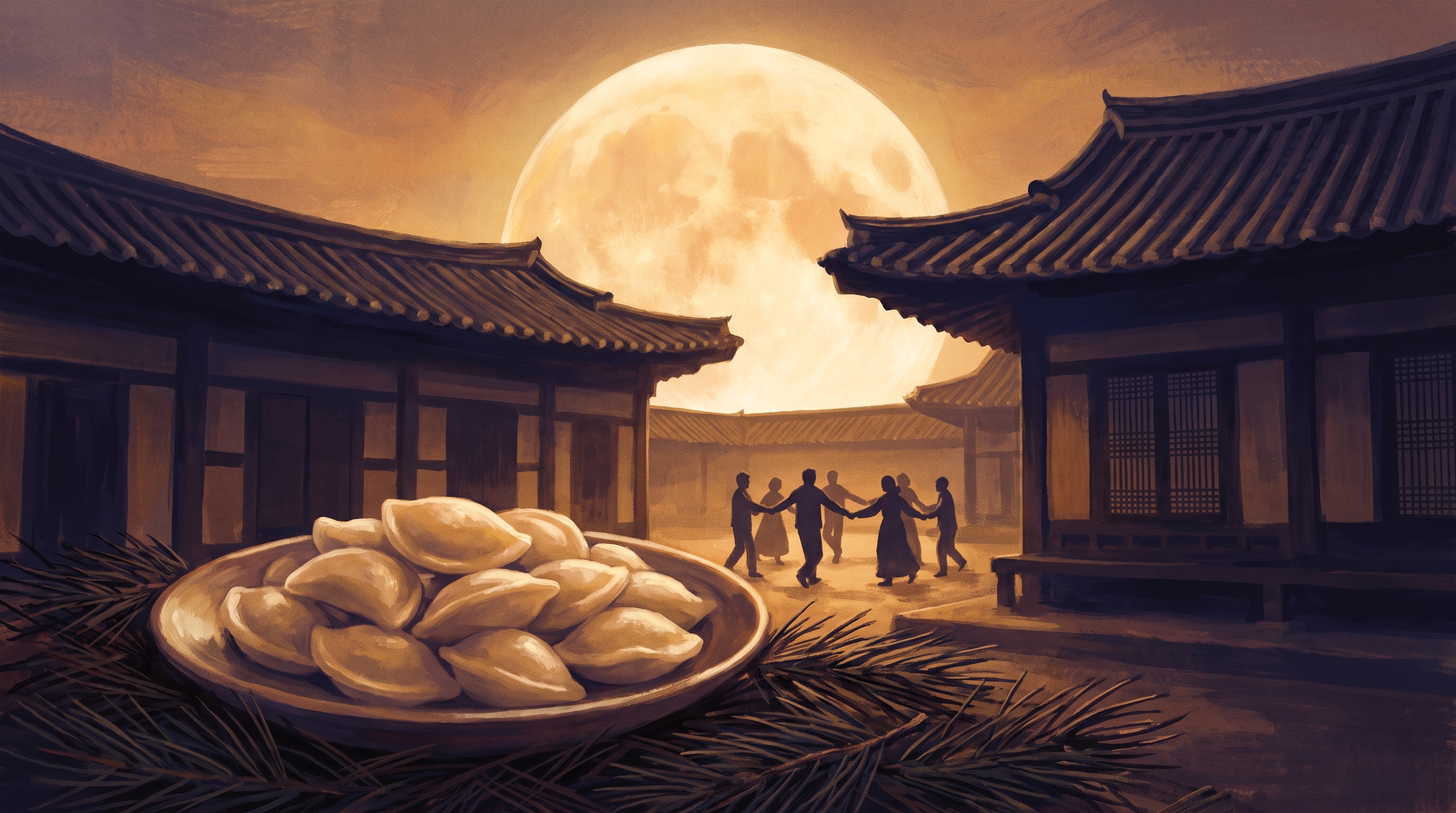
Songpyeon is the holiday's signature food. These half-moon rice cakes are filled with soybeans, sesame seeds, red beans or other fillings, then steamed over pine needles, which gives them a nutty taste and a light fragrance. The waxing-moon shape is believed to stand for prosperity and growth.
Other favorites on the holiday table include jeon (ingredients coated in egg and pan-fried), japchae (glass noodles stir-fried with vegetables) and yakgwa, a honey-and-ginger cookie. For a hands-on version, HANSIK Space E:eum in Jongno-gu runs jeon and songpyeon cooking classes during the Chuseok season. If you'd rather just eat, Mapo Jeon Alley serves a wide range of jeon, including kimchijeon, donggeurangttaeng meat fritters and bindaetteok mung bean pancakes.
Folk Games and Living Heritage
Chuseok gatherings have long included performance and play. In ganggangsullae, people join hands and sing and dance in a circle under the full moon, wishing for a good harvest and a peaceful community. Ssireum, a traditional Korean wrestling style, and talchum, a masked dance drama, are also on UNESCO's Representative List of the Intangible Cultural Heritage of Humanity.
To see some of these traditions up close, the National Folk Museum of Korea hosts "Together for Chuseok" on September 26 and 27. Events take place in its main building lobby, front courtyard and Children's Museum outdoor playground in Seoul, and at its branch in Paju, Gyeonggi-do Province.
Beyond Seoul: Museum Festivals and Andong Mask Dance
Regional national museums put on their own celebrations. Daegu National Museum runs free craft activities, including ddakji making and traditional table decoration, on September 24, 26 and 27, open to the first 500 participants each day. Jeonju National Museum hosts the Chuseok Hangawi Traditional Folk Play Yard in its outdoor courtyard from September 24 to 27. Cheongju National Museum holds its Chuseok Hanmadang across the whole complex on September 26 and 27.
For a longer trip, Andong is the obvious choice. The 2026 Andong Maskdance Festival runs from September 24 to October 4 at Andong Mask Dance Park, where visitors can watch traditional mask dance performances. That gives you plenty of time to see talchum live even after the main holiday is over.
Programs for International Residents
If you live in Seoul rather than just visiting, check your local center. From late September to early October, the city runs Chuseok cultural programs at six Foreign Resident Centers and at the Gangnam and Itaewon Global Village Centers, bringing Korean and foreign residents together. Programs include holiday food-making classes. Details differ from center to center, so confirm times and sign-up rules with your nearest one before you go.
Korea Tourism Organization en · Korea.net Travel en · Seoul Metropolitan Government en